Showing posts with label safety. Show all posts

Saturday, October 10, 2026

Lights on at the Dock

I recently was at the dock at the Honeysuckle Boat Luanch on Hayden Lake Idaho USA and found that many boaters turn their lights off or never had their lights on at the dock. It's particularly an issue at busy launches when boats, even late in the evening are coming and going from the launch. With your lights off its easy to not be seen and be run into. Dark moonless nights make it worse. With your lights off you are liable for damages. Simply turn your lights on and all is good.


Friday, February 13, 2026

WATER RESCUE — LAKE PEND OREILLE

Every year during late winter and early spring we learn of drownings that could have been prevented simply by wearing a Life Jacket/PFD. The following report is a good example of what not to do when it comes to paddling and/or boating on cold water.


For heavens safe wear a dam Life Jacket, seriously it's not that hard. I just hate to hear about preventable deaths. I value life and deaths as a result of carelessness or being uneducated about water safety is a death that could have been prevented.


A life lost is painful to loved ones and to our community.


Here is the report...

Timberlake Fire Protection District, Northern Lakes Fire Protection District crews and Kootenai County Sheriff's Office responded to a water rescue involving two kayakers on Lake Pend Oreille this afternoon.


Two kayakers were on the lake when one kayak capsized. The male who remained in the kayak did not have a life jacket, while luckily, the male in the water did have a life jacket. Initially, the individual in the water was clinging to the side of the kayak. The kayakers were forced to abandon one orange kayak, which remained floating in the lake, and paddle to shore to await rescue.


Most of the responding crews staged at the Naval Base, where the Kootenai County Sheriff’s Office Marine Patrol boat was stationed. Additional crews staged at the Eagle Boat Launch to obtain a visual on the two individuals. Fire crews deployed on the Bayview fireboat to reach the kayakers.


Crews made contact with the victim who was in the water and transported that individual to the Eagle Boat Launch, where they awaited the arrival of a Timberlake Fire Department medic. The second individual, along with a first responder, remained on the shoreline and was later picked up by additional responding personnel.

The Kootenai County Sheriff’s Office Marine Patrol was tasked with recovering the abandoned kayak.


According to the last report, the individual was out of the water and being warmed by rescue personnel in under 45 minutes from the initial call.


The sheriff ticketed the one of the kayakers for not having a whistle and life jacket/pfd on board. Your note required to wear you pdf (you should) but must have one on board, along with a sound producing device like a whistle. See requirements by clicking here.


FunToSAIL.com offers Boating Safety classes focused on sailors and paddlers. Powerboaters take of class from your local Sheriff Department or Coast Guard Auxiliary.


🛟 PFD SAFETY REMINDER 🛟


Wearing a personal flotation device while kayaking, whether or not it is a legal requirement it is a critical safety measure, especially during cold-water conditions.


Cold water shock can cause an immediate loss of breathing control, muscle strength, and coordination within seconds. Even experienced swimmers can become incapacitated before they are able to self-rescue or reach shore. A properly worn PFD keeps your airway above water, reduces fatigue, and buys precious time until help arrives.


Kayaks are especially vulnerable to capsizing due to wind, waves, and cold-water instability. A life jacket only works if it is worn, not stored in the kayak.


Not wearing a PFD is not just a risk — it dramatically increases the likelihood of a rescue call becoming a recovery call. Your life jacket in the truck does no good when you are dead.

Wednesday, September 24, 2025

Sailboat and Barge Accident

A boating accident that killed 3 girls at a summer sailing camp in Biscayne Bay Florida brings to light the dangers of sailing in a busy channel, particularly on that day with light winds, reducing speed and maneuverability of the sailboat. It appears the 5 girls and a 19-year-old female instructor were in a main navigable channel with little ability to sail at any good rate of speed when they were struck by a tugboat pushing a construction barge. The barge ended on top of the sailboat, a Hobie Getaway (17’ long), with the girls attempting to jump and swim out of the way. 3 of the girls were struck and drowned resulting in their deaths. Very tragic. My thoughts and prayers are with their families. On the side note, all the girls were wearing life jackets.

I live near the Snake River where tugs pushing grain barges are a constant sight. The question has been asked why the tugboat skipper did not stop or avoid the collision. The non boater/land lubber this seems like good questions but for us experienced boaters/skippers its more complex.

Boating rules state that boats with limited draft and maneuverability have rights over boats that are more maneuverable. We all the boat with so called right away as the Stand On Vessel and the boat that does not have right away is Give Way Vessel. In reality both boats need to avoid a collision. And in reality, the small sailboat was the Give Way Vessel. It is likely the tugboat skipper never saw the sailboat due to all the gear and crane on the barge. Big mistake on the tugboat captains' part as you must have a look out on the front of the barge. The sailboat skipper could see the tugboat coming but seemed to not take evasive action well in advance of the accident. It is the skipper's responsibility to be aware of their surroundings and act accordingly to prevent an incident. Some would say the wind was light, which it was, and had no motor, which is correct. The best option would have been to not sail on light days in the channel when busy and to paddle and/or skull the boat out of the way of the tugboat. Channels should be avoided and only crossed when needed. Again, maneuver out of the way well in advance. With an added note, we sailors all know the wind can die without notice, so the sailboat could have had wind and then it died. From the report there is not a note about the wind but in imagens we can tell there is little wind. Also, on very windy days one would not want to capsize in a busy channel resulting in being ran over.

Some might ask what the tugboat captain could have had done. He should have had a lookout or some type of video camera in his cabin showing all in front of the barge. That was his main mistake that likely will cost him legally. What I do not know is if the skipper saw the sailboat but could not maneuver in time. Did he blow his horn, warning the sailboat skipper that might have not been paying attention, or assume the tugboat could maneuver around them (not a correct assumption).


The reality is that the sailboat skipper made a fatal mistake, she was in the wrong and did not take action early enough to avoid getting hit. The tugboat captain had few options due to being restricted to the channel by draft and maneuverability. However, his lack of a lookout is a big problem and breaks a big navigation rule. His main option would have been to slow down at least or put the motors in reverse (if conditions allowed); there really was not much he could do once near the sailboat.


I am not trying to put all the fault on the young female skipper as we all make mistakes but sadly, in this incident, obviously it was a fatal mistake.


My other thought is that this was part of the Maimi Yacht Club sailing program in a busy boat traffic area. Why was there not a support boat looking out for the campers/sailors. And if they had a support boat, why were they not watching sailors in this busy channel. A support boat could have easily moved the sailboat out of the way, out of the channel.


So where is the blame, really it's on all parties… Tugboat captain did not have a lookout and was not blowing his horn, the young skipper did not act soon enough (getting out of the way); And the yacht club did not have proper on the water support. In the end it’s an epic tragedy that could have been avoided, one we all can learn from.


See VIDEO at this link...

https://youtu.be/Ax4x-RZ6aaI?si=g9gKqc6NUw7hjdOm

https://youtu.be/pzfVRdxY5i4?si=E1P6n874g0lGG1LS

This is a continuing investigation

Friday, June 13, 2025

Lake Coeur d'Alene Boat Fire

Marine deputies and fire crews responded to a boat fire near Higgins Point on Lake Coeur d'Alene on Saturday morning, with all people evacuated safely and no injuries reported.

According to the Kootenai County Sheriff's Office (KCSO), the incident occurred around 11 a.m. Saturday, prompting a response from KCSO Marine Deputies and local fire crews. All people aboard the vessel were able to get off the boat before emergency responders arrived.


The cause of the fire remains under investigation, sheriff's officials said.


The sheriff's office used the incident as an opportunity to remind boaters about the importance of water safety and preparedness.


"It is a good reminder that you need a fire extinguisher on your boat," KCSO stated.


No additional details about the number of occupants, the type of vessel involved, or the extent of damage were immediately available.


NOTE: Fire likely cause from fumes in the bilge and the blower was not turned on or not turned on long enough, and no fire extinguisher on board.

Thursday, January 16, 2025

Stranded on a Deserted Island

I do not know about you but I like stories of adventure, etc. True stories about people being stranded on deserted islands fascinates me. This particular store was the inspiration for the book Robinson Crusoe. Here is one such story...


Friday, March 29, 2024

Unmanned boat crashes into sailboat


A news report from 3 years ago reported that an unmanned inflatable boat crashes into a sailboat In Mission Bay, CA. USA, injuring 1 on the sailboat. "Officials from the San Diego Lifeguard Service said they heard reports just after 6 p.m. of an unmanned vessel crashing. The boat's operators somehow lost control of it and ended up in the water, lifeguards say."

So what really happened, if you watch the video it is obvious the person operating the boat fell overboard while under way (as reported). The operator did not have the ignition safety lanyard connect to their life jacket/clothing. This means this when the operator fell overboard the lanyard was hanging from the motor safety ignition switch allowing the motor to continue running. If the operator had it connected to their clothing the motor would have shut off immediately and prevented the accident.

Sadly this is an all to common boating mishap. The safety shut off switch and lanyard are their for a reason but many boaters ignore it much to the determent of their and others safety.

Falling over and having the boat continue far beyond you is only one of many issues. The boat leaving you of course can be a problem, particularly if one does not have a life jacket on. Many times the boat motor will kick to one side of the boat make the boat go in a circle, call the spiral of death because the boat can come back and run you over. The other issue is the boat continuing on without you can result in the boat running into others.

So freaking put your darn lanyard on, weather you driving a small fishing boat, or a ski or wake boat, or outboard motor on a sailboat, etc. connect the lanyard clip to you!


Sunday, March 3, 2024

Powerboater problem with sailboats

BACK

I thought this video was a perfect example of why powerboaters should never make a video about the problems with sailboats as it devolves into silly arguments against sailboats because the lack of any real knowledge on this topic. I think if one does a video about the pros and cons of powerboats versus sailboats its better to drop the pros and cons and simply note each boats characteristics, usage, etc. Let the reader or listener make the choice of what is best for their needs.

However here is my evaluation of this powerboater, Wayne the Boat Guy video called "Sailing: The Problem With Sailboats." See his video below.

I do not want my comments to be negative but its obvious Wayne has never sailed. His comments are what I find typical of power-boater mentality. Seriously why even make a video about a thing you know nothing about. I would never do a video on racing cars because I know nothing about it.

I am going to comment related to each of his 5 points on his video about the problem with sailboats.

1. Steep Learning Curve: This depends on what you are going to sail. I run a sailing school, teaching on small boats up to 18', small catamarans and sportboats (what some may call trailer-able keelboat). I teach basic small boat (capsize-able boats) and big boat (non capsize-able boat with cabin) classes, that includes safe boating. Both of these classes are one day classes starting at 7am and ending at 6pm. I teach the required safe boating stuff and basic sailing, by the end of the day all my students sail well, mainly because I keep it simple. So in a day with any excellent instructor one can learn to sail. After this class one can build on their knowledge and base skills layer by layer until one is highly proficient. The fact you can motor your powerboat out and back to the dock with no or little skill is nothing to brag about, all boaters no matter a sailor and powerboater should all take classes. There are far more powerboat accidents than with sailboats, why because sailors have to be knowledgeable, they can't just turn the key on and go. Wayne says driving a boat is similar to a car in spite of having no brakes, etc. Really, like a car? No brakes, hull moving through the water, etc. is just like driving a car. Sorry that is quite a stretch.

2.The Weather has to be just right:  Well he obviously does not understand weather. No, the weather does not have to be perfect as he states. Are you kidding, have you seen all the variable weather that sailors sail in. I think he is talking about no wind or little wind. My students have learned to say “there is always wind.” Now I am joking kind of, however the air is rarely not moving, if the air is moving, there is wind. The boats I sail can sail in a whisper of wind. None of my boats have motors. I have oars, paddles, or other human powered options. I grew up in Westport WA sailing on Grays and Willapa Harbors, and the Pacific Ocean and never used a motor, not once. Now I know I am the extreme example even with sailors. What I have learned is to watch the weather and tides/currents. New powerboaters and those who are not very educated would be wise to learn a lot more about the weather, as the weather can significantly impact ones boating. The weather can kills you! Does not matter if your a sailor or powerboater. Sailors are known to work well with weather, most powerboaters not so much. 

3. Going Solo: He says its not easy to sail solo. Actually its so so easy to solo sail. If a sailor solos a lot he will own a sailboat that is easy to do that with. Heck I had a 33' racing catamaran with a 16' beam, 54' tall mast, and sailed it solo all the time. love to solo sail it. I still regularly solo sail. Sure it takes skill to sail solo, but once your an experienced sailor one can easily solo sail. I am solo sailing a small sailboat to Alaska in 2025. There are a lot of weekend warrior sailors, or martini sailors as they are called that simply do not take the time to learn to sail solo, they are the ones you see always motoring their sailboat, with the sails never up. That is fine if one wants to do that but do not judge the ease or not of solo sailing from them.

4. They Are Slow: Oh boy this guy has no clue on speed. Sure most keelboats and big house boat like catamarans are slow, however there are many sailboats that are much faster. I had my 33' cat up to 26 knots. I could regularly sail her at 15-18 knots. Under motor power it was easy to have her at 10 knots. So there is a lot of variability in sailboat designed related to speed. I should note all the around the world speed records on water are by sailboats, none by powerboats. If you watch SailGP racing, those foiling catamarans reach speeds up to 60 miles per hour.

5. More Work: "More work? More Preparation?" No matter a powerboater or sailor one should be prepared. Before I go sailing I supply a float plan to someone that will notice if I do not get back in a reasonable time (if you do not know what a float plan is, that is a big problem). When I go to sailing it does not take hardly any work, because my boat is always prepared for any trip. All I really need to do is check the weather and pull up my sails and off I go. Pretty simple. Rigging, if your boat is at a dock it takes little work to do and go. Sure you have to take the covers off the sails (extends the life of the sails), about a 5-15 minute process. If you trailer your boat, sure rigging takes more time, but again it depends on the sailboat. The rigging as he calls it is already set up, what is there to do really. My Hobie Wave literally takes about 15 minutes to rig and launch. If you are driving a powerboat are you really going to just tie to the dock and turn off the motor(s), and go. Really, your not going to do anything else with your motor? If your on salt water are you not going to clean out your system? Not going to lock up, check the boat, etc. He notes if it is hot putting the sails away is difficult? Boy I never knew sailing was so hard before listening to him. I have sailed for 57 years. Nope, not hard to me. I see all the work my friends have to put into their motors (repairs, etc.) and cost of gas and oil, etc., which always makes me thankful to be a sailor. I especially love when I sail by them when their motors die (as long as I know their ok I will sail by). I am being funny but Wayne may want to start exercising if he thinks such low effort requires so much work.

On the topic of hating power-boaters, the reason some sailors dislike power-boaters is simply what Wayne's attitude is. He says "I can take my boat out with no training and boat." This is the problem! Most power-boaters are uneducated. You take training to drive a car, yet they think no training is needed to drive a boat, and that is just not true and its also a dangerous way to think. Powerboaters are not suppose to create a wake within 100 feet of a sailboat, boats not moving or anchored, or other non motorized watercraft, yet they do it all the time, why because they have no clue. I could make a very long list of what I see powerboaters do wrong almost every time I boat, not so with sailors. The good news is at least safe boating certifications are now required in all but 4 states. Hopefully those 4 states will be on board soon. You might notice these certifications are for powerboats of 10-15 hp or more. No such requirement for sailors. Food for thought, hint its because 99.9% of all boating accidents are by powerboaters. I suggest all powerboaters take a sailing class also. When you get caught in a big wind storm, etc. you will be better able to handle it because you will be much more aware as a sailor, much more aware of their environment and how windage affects the boat, etc.

I am not trying to be negative but seriously this video did not really teach the truth about sailing because its from the perspective of a powerboater with no sailing experience. So I was not surprised he got almost all of it wrong. Hopefully some day someone can make a factual video about the skills needed for powerboats and sailboats, without the biases. I am going to do such a video, so stay tuned.


Tuesday, December 12, 2023

Mast friendly reminder

Hello follow sailors... Just a friendly reminder. If you are going to leave your mast up
(vertical) this winter be sure no water can get into the mast. If water does get into the mast it will of course travel down to the bottom/base of the mast and accumulate. If the water can leak slowly out it can still accumulate as the water slowly freezes. When the water freezes it will expand and crack a mast like the soda can even if there is space above to expand upward.

If you must leave your mast outside in the freezing weather and are not sure if water is getting into the mast then lower the mast and store it perfectly level. If stored perfectly level then the water will spread out over the full length of the mast and when it the water freezes the expansion will push upward because their is room to do so over a large area (of course if the mast is not totally full of water).

If you want to leave your mast up then one needs to make sure the water can not get in. You do this best by removing the mast head and base, applying marine sealant as you put the masthead and base back in place. Sealing other fittings like rivets, bolts, etc. is important.

There are mast that have the ability to drain at the bottom, which is usually on boats that can not capsize or have very light weight masts that drain easily. On small capsizable boats if it capsizes and the mast is not sealed it can fill up with water resulting in a vey heavy mast that will eliminate that ability to right the boat.

I hope this reminder is helpful. 

Wednesday, November 15, 2023

Boating Fails

 I know its winter and some of us who stop boating during this time need a little joy at others expense. This video will do the trick.

 
So a few comments because the person who put this video together seems to not know much about boating so I want to comment on a few of the clips in this video.
- The guy who is the skipper but puts the boats on auto pilot and gets on a wake board while another is skiing is so illresponsioble. The skipper falls and the skier tries to climb back to the boat while via the tow line but also falls. Now there is no one on the boat and now the boat is a deadly craft that will end up hitting the shore or worse hit others resulting in injuries or worse. I might add ski/wake boats are suppose to have 3 persons, a skipper (driver), a lookout/watcher on the boat, and then the one skiing. This boat in the video only had two on board, skipper and skier. Crazy to see how totally illresponsioble people can be.
- Throwing furniture off a boat creates boating hazards.
- The red SUV spinning its wheels at a launch is common and happens to the best of us. Algae or other growth on the launch pad is common and makes it tough to gain traction. To avoid slipping only back down the launch far enough just to slightly float the boat and hopefully your front tires are not on the wet launch pad. Bringing a sand bag can help by applying a little by your tires. 4x4 does help. Just be aware that you can get super stuck on slippery launches.
- Securing your boat to the trailer is always a good idea or you will end up like the guy in the video clip.
- Not sure why the guy was sitting so far aft in his boat that he falls off. The lanyard was not used (lanyard hooks to the skipper and motor kill switch) as the motor kept on running with him not onboard.
- Video commentator is right a bailer like a bucket and/or pump is always a good idea.
- Never seen a heavy powerboat being launch via a dolly. Not a great idea.
- Yes low bridges are always a common problem with unaware boaters. If in doubt of clearance do not do it.
- And freak slow the Freak down when your in rough water instead of losing passengers overboard, and creating damages to the boat and passengers. I never get why powerboaters seem like slowing down is a bad idea. The girl headbanging in the video has to have a sore neck. Freak slow down in the marina, near shore, and by other boats. Its the law by the way!
- The clip of the boat on a trailer rolling down the road solo is interesting as it appears the tongue jack is down and obviously the trailer was not secured properly. If you not sure of how to hook a trailer to your vehicle go to a trailer place to learn. Leaving the tongue jack down will certainly put pressure on the hitch to push if off hitch ball even if secured properly. Not all videos on online teach this properly.
- If you see a powerboat filling with water while its being launch its likely the stern is secured to the trailer so when one backs in, the stern will scoop water. Also while on the water this can happen when the stern is direct into the waves. Note to self, pointy end goes into the waves.
- Not sure why the commentator says "this boat is as useful as a surfboard." Actually surfboards are very useful. The small boat in the clip is having a hard time starting the motor but is no real danger other than its a little rough along the non beach/soft shoreline, that can be a problem.
- One of the most dangerous clips is of the two guys in the very small inflatable boat in a super raging river. The shoreline is covered in bushes and low hanging trees. These are called sweepers and they will grab you, pulling you under, and drown you. Really hard for me to believe either of these guys got out of the water alive, hope they did. Can not express enough how dangerous sweepers are.
- Lots of the issues in this video is people simply being unwise or just downright unsafe for their own good.
- Falling overboard has all kinds of issues especially if you fall off at the bow and then get hit by the prop that can maim or kill you. I had a friend who lost is leg to a prop. I know of a grandpa who was pulling his grandkid in from the stern, he did not turn off the motor and the kid was killed by the prop.
- Common in the clips is boats being overloaded by two many people onboard, and their gear adds even more weight causing the boats to swamp/sink. Learn the limits of your boat.
- I hear people laughing in many of the video clips when they should be concerned, they have no clue of the dangers.

The point of this video to me is if you are new to boating take a safe boating class and in addition an on-the-water skills class.

I should do my own videos. Fun boating fails that are not too unsafe and ones that are dangerous boating fails.

Not trying to spoil the fun. Some of the video is certainly fun to watch and some of the clips should make us gasp with concern.

Hope you all have a wonderful Thanks Giving!

Monday, July 10, 2023

PWC Explosion

We teach in our FunToSAIL sailing classes that boats, particularly powerboats can explode if one does not turn on the blower for 4 minutes minimum. A blower on a powerboat is a fan system designed to suck out fumes that accumulate in the bilge, enclosed areas, etc. There is the potential for a fire and/or explosion if the blower is not turned on for 4 minutes or more. Some boaters think it these explosions only happens large boats with lots of fuel. As noted in the case below that is not true. read on...

KOOTENAI COUNTY, ID. — A man was injured after a watercraft exploded on Lake Coeur d'Alene on Thursday, July 6.

The Kootenai County Sheriff's Office says law enforcement responded to Blackrock Marina in Rockford Bay for reports of a personal watercraft explosion.

KCSO says the preliminary investigation indicates that the operator of the watercraft was fueling it, and before pressing on the gas to accelerate, the watercraft exploded, throwing him into the water.

His daughter, who was on another watercraft, got into the water to help him before emergency personnel arrived.

The man was taken to the hospital for non-life threatening injuries.

"The Kootenai County Sheriff’s Office would like to remind operators of PWC’s to ventilate the engine compartment by removing the seat for a minimum of 4 minutes, prior to starting. This allows fumes to dissipate from the hull of the watercraft, and prevents combustion."

Thursday, June 15, 2023

Kootenai County Sheriff Marine Report 345

Busy Weekend for Marine Deputies Early in the Season

Kootenai County, Idaho – With nicer weather occurring in Kootenai County, marine deputies have seen an increase of boats on the water for this time of year.  In May of 2022, there were zero charges issued for operating under the influence (OUI) of alcohol/other intoxicants, and six for the month of June 2022.  Thus far in 2023, marine deputies have charged 13 individuals (6 in May, 7 in June) with OUI.   One of the charges included a serious injury from a boat propeller to a passenger of a vessel.  The passenger was struck multiple times with the propeller after he entered the water to urinate while the vessel was making way.  This incident occurred on Saturday, June 10th, and sent the patient to Kootenai Health for serious injuries.  

The Sheriff’s Office would like to remind the public that while not illegal to consume an alcoholic beverage while operating a vessel, the .08 Blood/Breath Alcohol Content is easier to reach than on the roadway.  Environmental factors such as dehydration, food intake, and heat exposure can alter the process of alcohol entering and exiting the body.  The Sheriff’s Office would like to encourage operators of vessels to refrain from alcohol consumption while they are boating.  In 2021, Kootenai County had three boating related fatalities occur, with alcohol being a major contributing factor in all three.  Kootenai County issued 53 OUI charges in the past two boating seasons and is on track to surpass that this year.  

In addition to alcohol negatively effecting the boating community, inexperience and negligence also contribute to water related disasters.  At no time while the vessel is making way through the water should occupants be riding on the bow (front) or stern (rear) outside of the seating areas.  These acts are occurring daily and are unsafe as well as discouraged from boat manufacturers.   Violations of safety laws such as negligent operation and improper personal floatation devices (life jackets) will likely result in a citation as death is a likely result of continued unsafe practices.

Any boating or boating law related questions can be sent to marine@kcgov.us as well is information on safety classes offered free of charge by the Sheriff’s Office.

Sheriff Robert B. Norris

By: Sergeant Ryan Miller

Contact: Lt. Zachary Sifford

Office: 208-446-2245

PIO Cell: 208-758-1045

sopio@kcgov.us

Visit this link for media releases... https://kcsheriff.com/229/Media-Releases

Monday, June 12, 2023

Soggy Tandem Island

I have indicated to some of my customers that the hatches on the Hobie Mirage Tandem Island (TI) can leak. Here is a great example of that truth with a TI that is currently in the Race 2 Alaska (2023).

How do you fix this issue. For most trips you will be fine but if you are getting waves over your boat consistently that is when it becomes a problem. To fix it, one puts oil or vacylinee on the seals to make the water bead up and reapply ever so often. Tyten the forward hatch bungee. One can also put an extra seal on the forward bow cover/hatch. See the video below for these and other additional fixes. 

As we see in this video the boat is totally full of water. The sailors indicate the boat did not sink due to the outer hulls buoyancy and mostly that is true, but there is also positive flotation in the center hull that should never be removed.

Watch the progress of this TI in the Race 2 Alaska by visiting this site and also visiting R2AK.com


Monday, May 8, 2023

2023 Life Jacket Changes

New Life Jacket Labels and Icons – What do they Mean?

Have you seen the new labeling on Life Jackets? Around 2022 Life Jacket manufacture's started producing Life Jackets with the new labeling (established April 17, 2019. See US Coast Guard notice). Large and small retailers are just now starting to carry these new labeled life jackets as they wanted to sell out their stock of older life jackets with the old Type I-V labeling (still legal). The new labeling is an effort to make selecting the right life jacket for you and your intended on-water activity, easier. This new labeling process is also referred to as life jacket label harmonization, which is an effort to make them more universally understood and accepted, especially in Canada and Europe (means you can use your USA life jackets there). The goal was to simplify the labels with less writing and more icons.

What Was the Old USCG Life Jacket/PFD Approval System?

The Old USCG Approval System divided Life Jacket/PFDs into Types: I, II, III, IV (not a life jacket, a throwable ring or cushion), and V. The Intended Use (Paddling, Sailing, General Boating, etc.) was added to the label printed on the inside of the Life Jacket/PFD. All models approved were only certified for use in the United States, U.S. territories and U.S. vessels at sea.

Top 10 Features and Goals of the New US Coast Guard approved Life Jacket Labels are as follows...

1. Performance summary graphic

2. Activity appropriateness icons

3. Legal requirements specified

4. Reduce language barriers

5. More universal acceptance

6. Harmony with other countries

7. Approval status clearly noted

8. Third party testing verification

9. Manufacturer contact information

10. Care and cleaning instructions

In general, the intent of the new labels is to help users select and care for the appropriate life jacket for the activity in which they are participating. The labels have fewer words more easily understood icons.

What About the Old Labels and Life Jackets?

In 2014, the U.S. Coast Guard removed the “Type” codes from the Code of Federal Regulations. As you may recall, life jackets/personal flotation devices had been referred to as Type I, II, III, IV and V, each of which corresponded to a certain performance or designated use. Going forward, these devices will be referred to as either “throwable” or “wearable” and have a performance category indicated by an icon.


Old Label

New life jackets that are brought to the market feature these new labels. However, it will take many years for the older style labels to be completely phased out and you are likely to see both styles in stores, on boats and in use for many years to come. Any life jacket with the old-style label that is still serviceable and in overall good shape, as long as it’s Coast Guard approved, will continue to meet regulatory requirements. However, these old TYPE life jackets may not be legal in other countries.

Take the Time Understand the New Label

Selecting a proper life jacket and wearing it is the best thing a boater can do to ensure a safe and enjoyable day on the water. A hang tag with important information accompanies each new life jacket. If shopping in a store, be sure you leaf through this hang tag or ask a store associate if you have any questions (some of these associates may not know or understand the labeling). If shopping online, read the full product description and reviews to ensure you’re purchasing the right life jacket for you. Taking a safe boating or other marina course should educate you enough about these new life jackets.

New life jackets feature information in four main categories, usually in separate boxes. At the top of the label, usually toward the neck, is sizing information. The sizing usually specifies a user weight range and chest size range. Proper fit is one of the most important considerations when selecting a life jacket. Additional considerations are found elsewhere on the life jacket label. The placement and location of the information may vary; however, they must be on the life jacket.

What the Labels Tell You

 Performance, Buoyancy and Turning Information (does it float you face up or not, etc)

 Warnings, Intended Activity and Limitations of Use

 Manufacturer, Certification and Approval Information

 Care and Maintenance Instructions

Understanding the New Label and Icons...

LEVEL 50: Intended for active watersports like water skiing and wakeboarding, these minimize bulk and restriction. They may also be used by dinghy sailors. Regulatory changes will have to be made in the U.S. and Canada for these to be legal, so their introduction appears to be many years off. They provide around 11.2 lbs of buoyancy. It is less buoyant than a Type III, very minimal buoyancy. Better to go with a 70. 

LEVEL 70: Very similar to an old Type III Life Jacket used for inland waters. Inherently buoyant, close-fitting, and available in a variety of designs tailored to different types of boating. 15.5 to 22.5 lbs of buoyancy. In the future, there may be inflatable versions of Level 70 devices, but this would require a change in federal regulations.

LEVEL 100: These vests will have greater buoyancy for rougher waters. They may be either inherently buoyant or inflatable. Around 22.4 lbs of buoyancy.

LEVEL 150: These vests will be similar to our current offshore inflatable life jackets and may have integral harnesses. Intended for rough waters where rescue may not be immediate. Will also have inherently buoyant versions. Around 33.7 lbf of buoyancy.

LEVEL 275 (not shown in above diagram, shown below): These inflatable life jackets will be for extreme conditions, especially when the wearer might be carrying gear that adversely affects his/her buoyancy (like tools). They are generally intended for commercial users.

Throwable Life Rings and other lifesaving throwable flotation devices are no longer called Type IV (4) Throwables but now are simply called "Throwables."

All these Life Jacket rating levels indicate Performance, Buoyancy and Turning Information – The thing you’ll notice is a bold-faced number. It could be 50, 70, 100, 150, or 275. These are measurements of gravitational force, which in the case of a life jacket is essentially buoyancy. Simply put, the higher the number, the greater the floatation. For the time being, most all of the life jackets on the market today in the United States are Level 70 life jackets.

Let’s go over an example.

Level 70 Label Decoding - The bold 70 means it’s a Level 70 life jacket which provides performance similar to the Type III life jackets previously available. Life jackets that are rated lower than 70 are not U.S. Coast Guard approved. This is a metric measurement in Newtons (70N is roughly 15 lbs. of floatation). Newtons are used so that it’s consistent with European and Canadian standards.

Also, on a Level 70 life jacket label, you’ll see a dock and an extended hand with some slightly wavy lines indicating fairly calm water. This means this life jacket is suitable for near shore use in relatively protected water where rescue is likely to be near at hand. You’ll note that the higher the number on these icons, the farther away the dock and background is, and the bigger the waves are in the icon.

The curved arrow indicates the turning ability of the life jacket. Turning ability is whether or not a life jacket is capable or designed to turn an unconscious person face up, unassisted. A Level 70 life jacket will not turn a person right side up, that’s what the curved arrow with a slash through it indicates. If there is no slash, it will turn most wearers face up. The higher the level number the more turning ability.

The next thing you’ll notice are warnings and exclusions. In this example, this life jacket is suitable for general boating. However, there are icons with activities and a slash through it. These symbols indicate this life jacket is not suitable for towed sports such as skiing and tubing, nor is it for personal watercraft operation or whitewater paddle sports. The exclamation mark in a triangle indicates a warning/alert/problem/issue. 

Some jurisdictions may have regulations about what device design is required.

Manufacturer and Certification Information

In the United States and on navigable waterways, a Coast Guard approved life jacket, properly fitted for the intended wearer must be aboard for each occupant. Therefore, knowing your life jacket is approved by the Coast Guard to meet carriage requirements is important. You’ll find this information, as well as testing approval numbers and manufacturer information in this section of the label.

Care and Maintenance Instructions

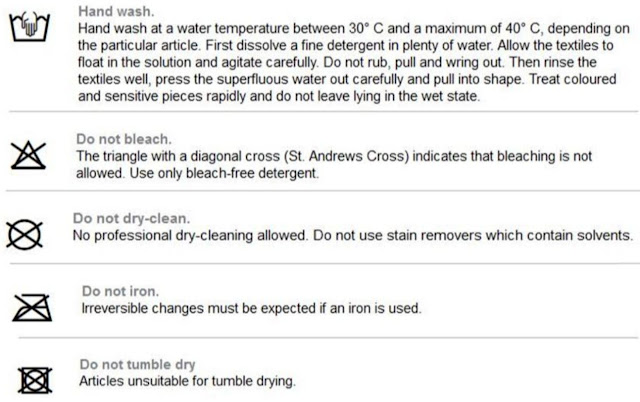
A life jacket should be viewed as an investment. You should care for it like you would anything else aboard that depends on proper function, with the exception this one could save your life! Your label and manual that came with your life jacket will have general cleaning and care instructions. These icons inform you to hand wash only, and to not use bleach, dry-cleaners, irons, or dryers in your care routine.


Life Jackets - Some Things to Know

 There must be at least one life jacket for each person aboard
 Life jackets must be properly sized for each person aboard
 Children under a certain age are required to wear their life jacket (typically under 13 – see state requirements)
 Participants engaged in certain water sports are required to wear a life jacket (typically skiing and personal watercraft operation – see state or counties regional requirements)
 Life jackets must be approved by the U.S. Coast Guard in order to meet requirements
 These life jackets must be readily accessible and not in an out-of-reach location or in original packaging if easily accessible.
 Any boat 16’ and longer (except canoes and kayaks) must carry a throwable PFD
 Throwable devices must be immediately available for use such as in the cockpit or near the helm
 An inflatable life jacket must be properly armed with an unused gas cylinder
 Inflatable life jackets are authorized for use on recreational boats by a person at least 16 years of age (not authorized for commercial use).
 Whistle/Sounding Device on a Life Jacket is not required in the United States navigable waterways but are of course highly recommended. Adding a small light and/or strobe light to a Life Jacket is also recommended.

Learn more about Life Jackets and other boating safety information at the US Coast Guard website... https://uscgboating.org/

Monday, January 9, 2023

Lake Pend Oreille Basin News

Dear Stakeholders, Members of the Public, and Local Media,

Please see the forwarded email below from the US Corp of Engineers (USACE), who operate Albeni Falls Dam. The USACE announced yesterday that they will begin filling Lake Pend Oreille today for Flexible Winter Pool Operations (FWPO). As explained in their email, they anticipate LPO (and the Pend Oreille River) to rise about a foot over a 10-day period. They will then release that water to generate power. 

If you are recreating on the water during this time, please use caution and beware of potential ice break up and floating ice.  

Flexible Winter Pool Operations is the process used to generate additional power for the hydropower grid when there is a power shortage somewhere along the grid. The Bonneville Power Administration (BPA) is the agency who requests this operation. I will send out a follow up email providing the history and a more detailed explanation of FWPO. To receive please visit the lakes commissions website and sign up for email notices.

Molly McCahon
Lakes Commission
Executive Director
phone: (208)265-4568
email: lakescommission@gmail.com 
website: lakes-commission.com

Sunday, January 8, 2023

Cobalt Disaster

This is a bit of a hard article to write. I feel as though writing about this intensely emotional topic I could never do it justice. However, my feeling is this is my initial effort to make people aware of this topic and hopefully start a dialog online to bring it to an end.

Some may ask why I am so anti lithium-ion rechargeable batteries (used in smartphones, tablets, EVs)? Why I have a hand crank, muscle powered outboard on my sailboat versus an electric one. I do have an electric bike and I am in the process of looking for a battery replacement that is made without a mineral that comes from abusing people.

So, what is the topic, modern day slavery, modern day relegation of a people to a life of pain and for many death. Not to mention the environmental destruction. I am writing about Cobalt mining in the Congo (Democratic Republic of the Congo) so that we all can have our precious cellphones and for some electric vehicles (more accurate battery power vehicles). About 20 percent of Cobalt mining is done in an ethical and as safe way as possible, but 80 percent is not, primarily done in the Congo and in other poor countries where people dig with their hands and primitive tools, being exposed to toxic dust and water. Many die from a slew of accidents, of cancer, and other ailments.

Every week these slave-like miners die in mine cave ins. They dig holes in the ground, through rock and dirt. These caves have no supports to help prevent cave ins. So let that sink in, this week like every and other week people have and will die due to these cave ins and bodily toxic reactions for years to come.

What is worse, is many of these miners are minors, kids as young as four. A lot of teenagers. You might ask why would parents allow this, its simple, economic survival. Because for many its the only way to make enough money to buy food. Plus locally grown food is destroyed by the toxic waste. People will do almost anything to survive. So literally whole families work together in the mines (those who survive) and also above ground in the toxic pools, sifting through the mud and dirt to find any pieces of cobalt they can find. It is crazy to think these people have no protective gear, no gloves, no masks, no helmets, etc. The mining companies are suppose to protect their workers, and many companies that use cobalt in their batteries is acquired safely and ethically. This is for the most part a lie or simple from a place of ignorance not wanting to look into it, they have no idea if the cobalt in their batteries are acquire safely and ethically. Mining companies with tell Apple, etc. that is all safe and ethical, which is not the truth. There is no excuse for Apple, etc. for not checking to make sure especially when they know many of the mining companies are Chinese that have the worst track record of any company. My bet is they do not want to know the truth so they can keep making billions off their products... Ignorance is bliss.

And worse again, if it can get worse (it can) is the mining companies take advantage of the people by only giving them a few dollars while they rake in billions. They do not give back to the communities that their mines are at. The only thing they give back is toxic water to drink, and a destroyed natural environment. Plus diseased people. All but one of these companies in the Congo is Chinese based. These Chinese companies along with their communist government are like locus, moving to place to place across the world like locus. They swoop in like locus taking all the minerals and once they are done, they leave devastation in their wake, i.e., toxic environment and death.

We think today we are living in a modern area, with peace and good will. We have advanced as a global society. No more slavery, no more war, etc. yet the reality is we are worse today in many ways than in the past. Slavery is as big it's ever been... Slave miners and slave human trafficking. It really is sad to think so many are in bondage today, like in the past. So, the question is what to do about it?

So my friends what can we do about it in relation to Cobalt and mining in general? Here is my list...

1. We should all be discussed this cobalt issuer until there is a world outcry. Cobalt has been mined for year yet this outcry has not happened. I think of myself, I did not know about this until I heard it on Joe Rogans podcast. We need write articles on blogs, on facebook, twitter, etc., write friends, write to companies that use batteries with cobalt (do not accept their generic “safe and ethical” statement, ask them how they know this and point them videos, etc. I have supplied below), write to your government officials. Speak to friends to help them become aware. This only stops via our efforts.

2. If you have a cell phone or anything that uses batteries with cobalt, use it as long as you can before replacing it. If you crack your screen go into a place that can replace your screen (cell phone companies will encourage you to get a new phone, always). This will reduce the demand for cobalt batteries and the phones, etc they go in. If companies feel the financial strain they will react. If they react negatively to us lets push back hard.

3. As noted avoid buying anything with cobalt in it, this includes EV's, electric vehicles or more accurately batter powered vehicles (BPV's) and other cobalt battery products such as outboard motors. I have to say Tesla is actually trying to reduce their dependence on cobalt, by producing cobalt free batteries. Tesla indicates 50 percent of their cars are run by cobalt free batteries. Their goal is 100 percent cobalt free, so at least one company is doing something. I do see other notes online about companies planning on building cobalt free batteries. So there are good signs that cobalt usage at some point will be a thing of the past or at least greatly reduced demand.

4. Also read Siddharth Kara's book "Cobalt Red: How the Blood of the Congo Powers Our Lives." Mr Kara is the leading expert on the whole Cobalt mining industry and associated slavery. He is the lead voice, and his book should be purchased and promoted wherever possible. I would not buy the book from Amazon sense Amazon is part of the cobalt usage issue. Buy on Barnes and Noble by clicking here.

These are things we can do now but we must make people aware and discussed about how other humans are being treated just to supply us with electronics. If every good human on earth was outraged by this, things will start to change, and lives saved.

We must remember when cobalt is no longer used or reduce usage, we must still support the miners in the Congo and other poor countries with health care, as many will have residual effects from the toxins. We must also repair the earth the best we can. We must supply these countries with education and opportunities once the mining is gone or greatly reduced so they are not left even worse off. You might ask how does one pay for all this and my answer, the companies that made billions off the pain and suffering of these people.

I understand this is a lot but if you, like me care about people no matter where they live then we must act. On top of this of course we must be as vigilant in stopping human trafficking.

Make a comment below and let's talk....


Search

ARCHIVE